How AI Search Works
How Do AI Search Engines Choose Sources?
How AI search engines choose sources. The retrieval, ranking, and citation signals that decide whether your brand appears in ChatGPT, Gemini, and Perplexity answers.
Last reviewed: July 19, 2026
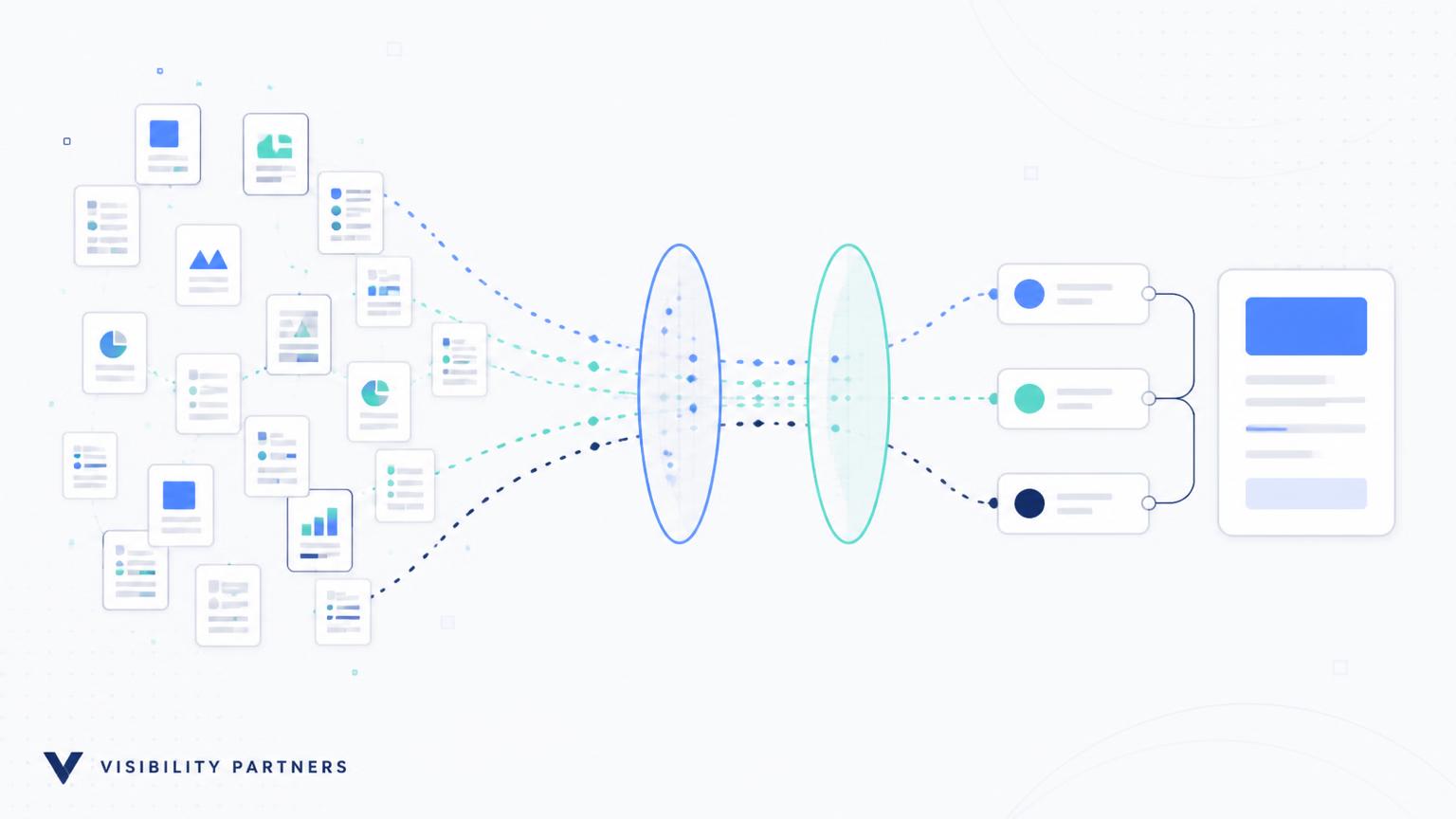
AI search engines don't pick sources at random. Every citation is the output of a pipeline: retrieval, reranking, and citation each apply distinct signals. Understanding that pipeline is the difference between guessing at AI SEO and engineering it.
- AI citations
- AI search sources
- how LLMs cite
Infographic
The three stages behind every AI citation
Signals that determine whether your brand is cited
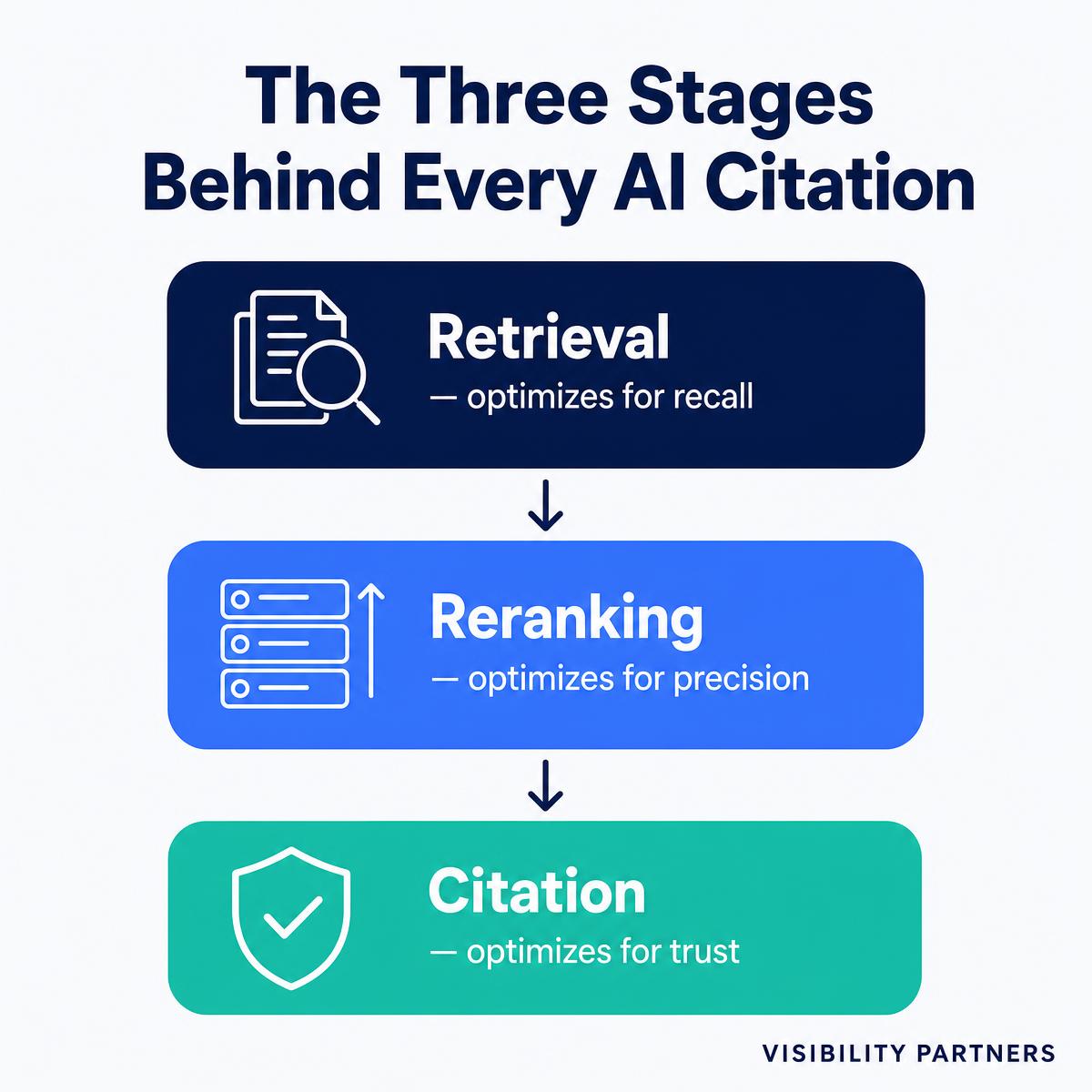
- Retrieval
- Recall
- Crawlability, IA, embeddings coverage
- Reranking
- Precision
- Passage clarity, topical fit, freshness
- Citation
- Trust
- Entity strength, third-party authority
Stage 1: retrieval
Retrieval is a recall problem — pulling a broad candidate set the engine could use to answer the query. It's optimized for coverage over precision.
The signals that matter here are boring but decisive: can the engine's crawler reach your pages, does your site render cleanly, is your information architecture legible enough for content to be clustered, and are your pages present in whichever embedding index the engine uses. Domains that fail at retrieval never enter the pipeline — no amount of downstream work fixes that.
Stage 2: reranking
Reranking is a precision problem. Given the candidate set, the engine scores each passage for how well it answers the query and how confidently it can be lifted into an answer.
Signals: passage-level clarity, topical fit to the specific query, freshness, and structural cues (question-first headings, tight answer blocks, structured lists). This is the stage where classic AEO work pays off — the same content patterns that win featured snippets tend to win reranker attention.
Stage 3: citation
Citation is a trust problem. The engine has to decide which of the reranked candidates to name — and which to lift verbatim into the answer.
This is where entity strength and third-party authority do the heaviest lifting. A page from a confirmed, well-cited domain will win the citation slot over a technically equivalent page from an unknown domain almost every time. It's also where sentiment can flip a placement: mentions inside negative context can be suppressed by the engine's safety and quality layers.
What signals matter most
- Clear entity identity across the open web
- Depth and consistency of topical coverage
- Third-party citations on trusted domains in your category
- Structured, extractable passages
- Recency of publication and updates
- Absence of contradiction across your own content
How engines differ
The three stages exist in every major engine, but the weightings differ. Perplexity leans hardest on third-party citation trust — its whole value prop is source attribution. ChatGPT balances entity strength (from training) with live retrieval trust. Google AI Overviews inherit the classic search authority stack and add answer-format signals on top. Gemini emphasizes grounding sources and Google-ecosystem confirmation.
A program that treats all four the same wins in one and loses in another. Segmenting reporting and tactics by engine is how mature programs avoid that trap.
Frequently asked
Keep reading
Ranking is no longer enough
You need to be cited, mentioned, and recommended.
Being cited, mentioned, and recommended are three different outcomes, and most brands only ever achieve the first one. Ranking is no longer enough because AI engines answer buyers directly and name only a short list of vendors as the recommendation — everyone else is cited in passing, if at all. Get a free AI Visibility Report to see exactly where your brand appears today across ChatGPT, Google AI Overviews, Gemini, Perplexity, and Copilot, where competitors are winning the recommendation instead, and what's keeping you from moving up the shortlist.